Year of the Four Emperors: The Chaos in 69 AD in the Roman Empire
- Sep 15, 2025
- 9 min read
Imagine the Roman Empire not as an unshakable monolith, as we often picture it, but rather as a massive ship that, after the tumultuous reign of Nero, suddenly found itself without a captain or a rudder. The suicide of Emperor Nero in 68 CE was not merely the end of an eccentric tyranny; it was the very snap that released the tension in the entire power mechanism. In an instant, the authority of the Julio-Claudian dynasty, which had kept the state in relative order for decades, vanished. And in the resulting ringing silence, a new, formidable breath of history could be heard—the iron march of the legions.

Up until that moment, the idea that an emperor could simply be proclaimed somewhere in a distant province would have seemed absurd even to the most seasoned skeptic. The throne was considered the domain of the Senate and the Praetorian Guard in Rome. But Nero, through his madness and incompetence, brought the true power player to the forefront—the army. The legions, stationed along the borders of the vast empire, suddenly realized their strength.
They were the ones shedding blood, keeping the barbarians in fear, and now they began to ask themselves: why couldn’t the one giving the orders be one of them? The soldiers understood that imperial power was not a divine destiny—it was a matter of loyalty and military might.
Thus began the infamous “Year of the Four Emperors,” an unprecedented period of civil war and political chaos that nearly tore the Roman Empire apart. In 69 CE, uprisings and conspiracies shook the empire, and the boldest and most determined commanders fought to claim the throne as their prize.
This was a story not of laws or traditions, but of raw, unrestrained ambition, where the stakes were control over the entire known world. Stability collapsed, and in its place rose chaos, paving the way for a series of usurpers whose struggles would forever change Roman politics.
Galba’s Uprising: The Beginning of the Crisis
The first spark to fall into the empire’s powder keg was not an action, but inaction. When the elderly and conservative governor Servius Sulpicius Galba received news of Nero’s death in distant Spain, he hesitated. The legions in his province already saw him as the new emperor, but the old man understood that such a move without external support would mean certain death.
That support came in the form of a rebellion led by Gaius Julius Vindex, governor of Lugdunensis in Gaul. Vindex, raising the banner against Nero’s despotism, became the first to dare challenge the principate, inviting Galba to lead the uprising. Although Vindex’s legions were quickly defeated by forces loyal to Nero from the Rhine army, and he himself fell in battle, his effort was not in vain. He showed the entire empire that an emperor could not only be appointed in Rome, but could also be created in a province by the force of arms.

For Galba, this became a signal. The Praetorian Guard in Rome, previously loyal to Nero, now found itself in a state of uncertainty and eventually swore allegiance to the new claimant. The Senate, breathing a sigh of relief after the tyrant’s death, officially recognized Galba as princeps.
It seemed that legality had been restored and the crisis over. But this was where true chaos began. As Galba entered Rome, he made a fatal series of mistakes that turned him from savior of the fatherland into its executioner.
Instead of generously rewarding the Praetorians who had secured the capital for him, he showed stinginess, immediately turning them against him. Rather than securing the loyalty of key legions on the borders, he displayed outdated and haughty severity.
Galba’s greatest mistake was the question of succession. Surrounded by his old friends and advisors, he refused the candidacy of Marcus Salvius Otho, popular among the troops, and instead chose the young and arrogant aristocrat Lucius Calpurnius Piso as his adopted son and heir.
This choice made sense from the perspective of the senatorial aristocracy, but it was completely blind to the realities of the new era. For the army, it sent another signal: the aging new emperor did not value their opinion and had no intention of rewarding loyalty.
Otho, feeling betrayed and understanding the fragility of Galba’s position, easily bribed the disgruntled Praetorians. As a result, after just seven months of rule, Galba was brutally murdered in the Forum, his head severed and thrown at the foot of Nero’s statue.
Thus ended the first, but by no means the last, attempt to stabilize the empire. His reign did not halt the crisis; on the contrary, it became its catalyst, proving to all ambitious generals that the throne in Rome was merely a matter of price and luck.
Otho vs. Vitellius: The Struggle for Power
Galba’s death did not bring peace; it only swung open the gates for a new wave of violence. Marcus Salvius Otho, welcomed by the Praetorians as emperor, found himself on a throne that was already smoldering from within. His authority barely extended beyond the walls of Rome.
While the new princeps tried to secure the Senate’s support and calm the people, a deadly threat was already brewing in the cold provinces of Germany. The legions of Lower Germany, still resentful of Galba’s rule and despising Otho as a puppet of the capital’s guard, took matters into their own hands. They proclaimed their commander, Aulus Vitellius, as emperor.
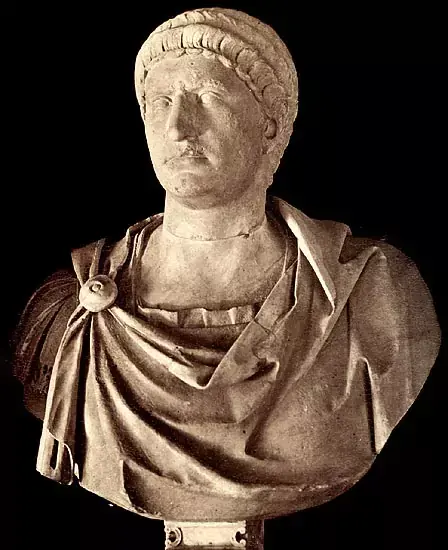
Vitellius was the complete opposite of the aristocratic Otho. Clumsy, gluttonous, and fond of feasts, he nevertheless enjoyed immense popularity among the troops precisely for his simplicity and generosity.
He was supported not only by the German legions but also by the armies of Upper Germany and Britain. This was no longer a small group of conspirators, but a powerful military machine set in motion. Two massive armies, commanded by Vitellius’ experienced legates, marched toward Italy like battering rams, ready to crush everything in their path.
Despite his image as a frivolous courtier, Otho showed unexpected resolve. Knowing that his authority depended entirely on speed and victory, he gathered all available forces and moved to intercept the enemy, aiming to block their path into Italy at the Alps.
However, his troops were a mixed lot. The battle-hardened Danube legions had not yet arrived, leaving him with only the Praetorians, sailors, and a small number of legionaries. The decisive clash, known as the First Battle of Bedriacum, took place near a small village in northern Italy.
Despite the desperate bravery of Otho’s men, the military discipline and experience of Vitellius’ forces—tempered by the harsh German campaigns—determined the outcome. Otho’s flank collapsed, and his army was thrown into retreat.
The realization of defeat brought Otho a moment of profound, tragic clarity. He still had the resources to continue the war: fresh legions were approaching from the Danube, and he could have taken refuge behind the walls of Rome, condemning the city to the horrors of a siege.

Yet in that moment, he displayed true, if belated, greatness. He understood that the civil war was only gaining momentum and that his death was the only way to stop further bloodshed. “Shall I, a single man, risk so many lives?” he reportedly asked his closest advisors.
The next morning, Otho took his own life, plunging a dagger into himself. His suicide—an act of both despair and statesmanlike wisdom—shocked even his enemies for a moment. He hoped that his death would end the war.
For Rome, however, it was merely a lull before an even greater storm. The throne now belonged to Vitellius, but his victory celebrations would prove premature.
Vespasian: The End of Chaos and the Start of the Flavian Dynasty
While Vitellius indulged in feasts and celebrations in Rome, as if the war were already over, a third and final act of this bloody drama was taking shape in the eastern provinces of the empire. Titus Flavius Vespasian, an experienced and thoroughly plebeian general who was at the time suppressing the Jewish rebellion, watched the chaos in the capital with growing concern.
He was supported by a powerful bloc of eastern legions, who saw in him not an aristocratic intriguer but their own soldier-emperor—a man of action, not of banquets. The idea of proclaiming him emperor hung in the air, and on July 1, 69 CE, it became reality. The legions in Egypt were the first to swear allegiance, followed by Judea and the entirety of Syria.

Unlike his predecessors, Vespasian did not rush headlong into Italy. He acted with the deliberate methodicalness of a true strategist. While he personally blocked the supply of Egyptian grain to Rome, creating hunger and unrest under Vitellius, he entrusted the conduct of the war to others.
Legate Gaius Licinius Mucian advanced westward through the Balkans with a strong army, while Vespasian’s loyal legate, Marcus Antonius Primus, led the Danube legions—eager to avenge their humiliation at Bedriacum—rapidly across the Alps.
The decisive battles unfolded once again near Bedriacum, and then at the walls of Cremona. The night fighting was fierce and chaotic, but the fury and discipline of the Flavian forces prevailed. The road to Rome lay open.
The capital of the empire became a battlefield, as Marcus Antonius Primus’ advancing troops clashed with the desperately defending Vitellian forces. Vitellius himself was captured and brutally killed.
Vespasian, without shedding a drop of his own blood, became the undisputed master of Rome. His rise to power marked not just a change of ruler but a fundamental turning point. He had learned the main lesson of the “Year of the Four Emperors”: relying on a single city or a single guard was fatal.
His authority rested on the loyalty of the frontier legions scattered across the empire. He carried out financial reforms to repair the treasury's catastrophic state after the civil war and initiated grand construction projects, the most famous symbol of which would become the Colosseum.
But his most important reform was the strengthening of the principate itself. He made imperial power less personal and more institutional, laying the foundations for the Flavian dynasty.
The Roman Empire survived 69 CE as if through a nightmare, but it emerged transformed. The chaos proved that an empire could not be governed as the private property of a reckless aristocrat; it required the hand of a firm administrator and a soldier.
Vespasian became precisely that kind of ruler—not the most brilliant, but one of the most effective. He did not simply seize the throne; he rebuilt a crumbling state, securing the empire two more centuries of stability and power.
FAQ: Year of the Four Emperors
What was the Year of the Four Emperors?
This is the term historians use to describe the period of 68–69 CE, when the Roman Empire experienced a severe internal crisis. After the suicide of Nero, the last emperor of the Julio-Claudian dynasty, the throne became vacant, and no one had an undisputed claim to power.
As a result, supreme authority changed hands rapidly: first it was seized by Galba, then overthrown by Otho, challenged by Vitellius, and finally claimed by Vespasian. This year demonstrated that an emperor could be created not in the Senate, but by the legions on the empire’s frontiers.
Why was the Year of the Four Emperors so unstable?
The main reason for the instability was the lack of clear rules for succession. The empire formally retained republican institutions, and the emperor’s power depended largely on recognition by the Senate and the army.
After the fall of the Julio-Claudian dynasty, this fragile system collapsed. Legitimacy mattered less than military strength. The legions stationed in different provinces had their own interests and could promote their preferred candidates. This led to civil wars tearing the empire apart, with each faction supporting its own claimant.
How did Otho and Vitellius struggle for power?
Their conflict was a classic struggle between the capital and the provinces. Otho came to power in Rome thanks to a conspiracy by the Praetorian Guard. However, his authority was not recognized by the Rhine border legions in Germany, who proclaimed their commander Vitellius as emperor.
The confrontation was resolved at the Battle of Bedriacum in northern Italy, where Vitellius’ more experienced and battle-hardened German legions defeated Otho’s forces. Realizing that continuing the war would only lead to more bloodshed, Otho voluntarily took his own life to stop the slaughter.
How did Vespasian come to power and stabilize Rome?
Unlike his predecessors, Vespasian acted not impulsively, but as a calculating strategist. While he controlled the vital grain supplies from Egypt, his armies, led by loyal generals, advanced toward Rome.
After defeating the Vitellian forces and capturing the capital, he began sweeping reforms. Vespasian replenished the treasury, strengthened discipline in the army, and launched grand construction projects to provide work for the people.
His greatest achievement was restoring the authority of the imperial office. He founded the Flavian dynasty, proving that the throne could be passed down by inheritance—a foundation for stability that would last for decades.
How did the Year of the Four Emperors affect the Roman Empire as a whole?
This crisis was a painful but necessary lesson. It clearly showed that the frontier legions, not the old aristocracy, held real power in Rome. The empire came to understand itself as a single organism, where the well-being of the center depended on the support of the provinces.
After this, emperors paid greater attention to the needs of the army and distant territories. The crisis of 69 CE laid the foundation for the empire’s golden age in the second century, establishing a model in which a strong military leader could stabilize the state and ensure a period of peace and prosperity.


Comments